
Set the schedule, then close the tab
Your schedules have a home of their own
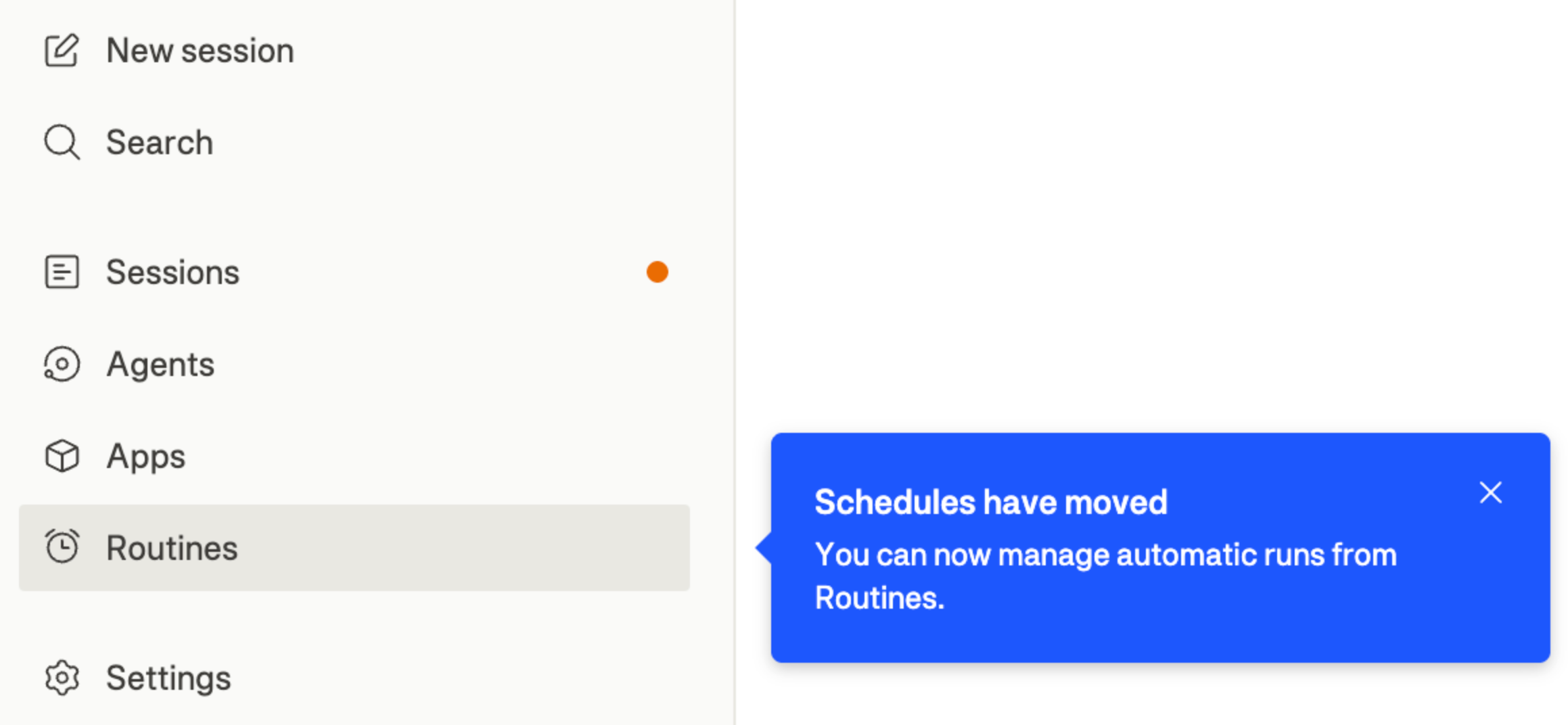
Scheduling an agent used to sit behind a button on the agent page. That button now takes you to Routines, a page where your scheduled work lives together.
A routine runs a task automatically on a daily or weekly schedule. Use routines for work that should happen consistently, such as reviewing stock every morning, updating a performance app each day, or preparing a channel summary every Monday. The full walkthrough is in the routines guide.
Hand an agent to someone else
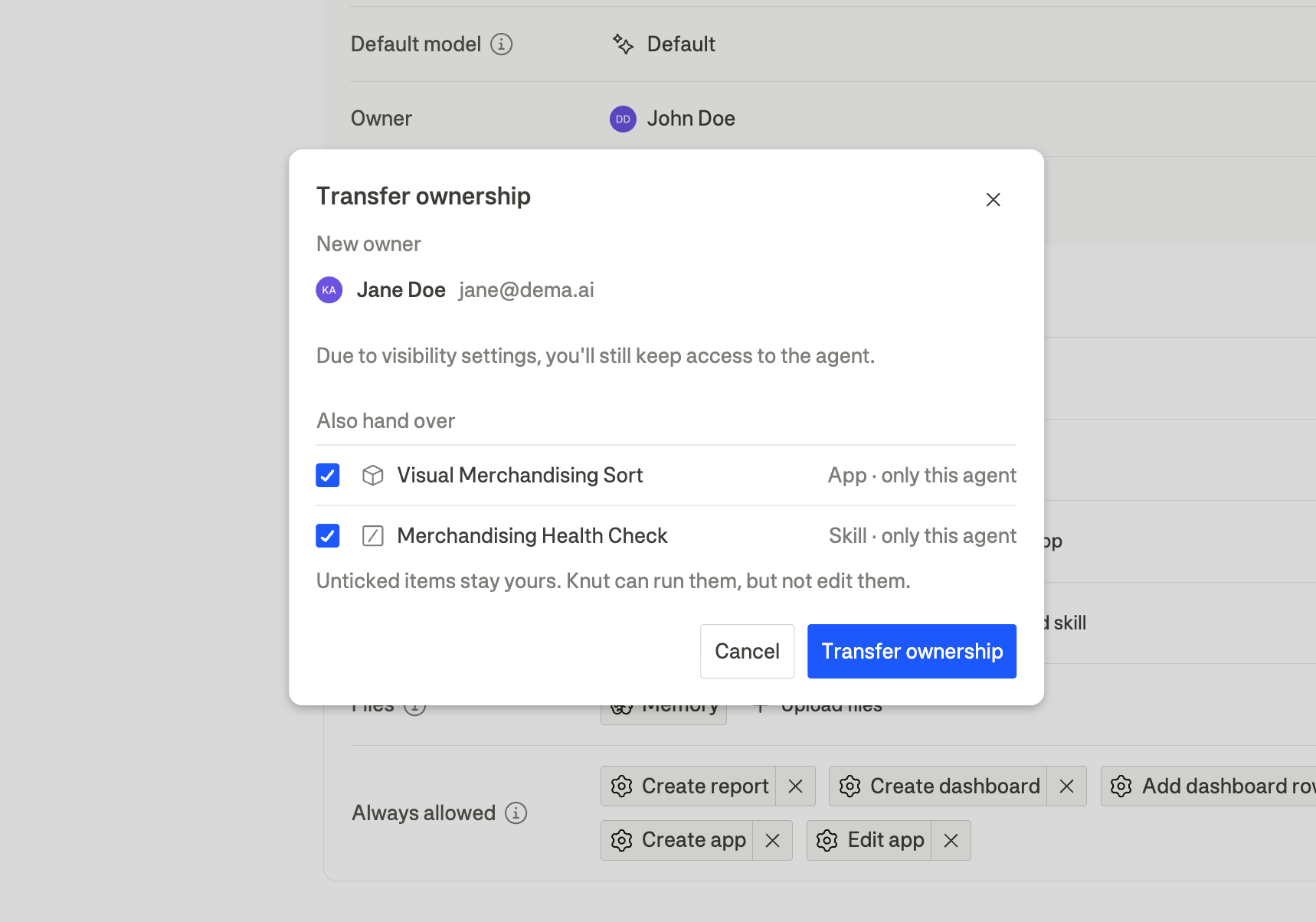
Agents and apps can now change owner. Click the owner's name on either one, pick a colleague from the dropdown, and it's theirs.
The useful part is what travels with it. Agents rarely stand alone: they carry skills and apps, and some of those are shared with other agents. The transfer dialog lists everything linked to the agent and lets you decide what moves. Skills and apps that only this agent uses are ticked already, so for most handovers you can accept what's there and confirm. For an agent that shares its skills more widely, you get to choose who ends up owning what.
Tell each integration what it may read and what it may change
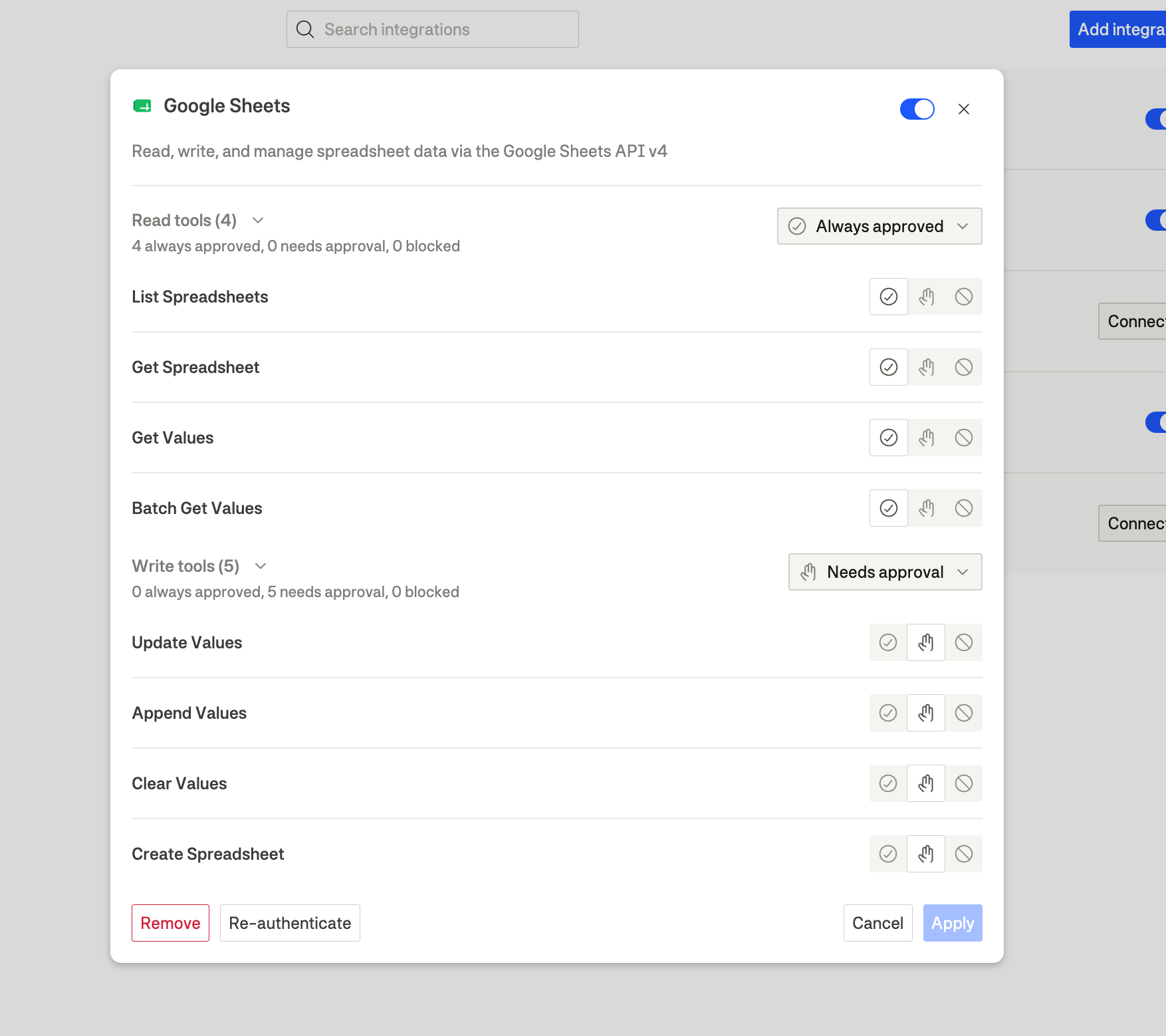
An agent's integrations now separate the tools that read your data from the tools that change it. Open a connection, and you get Read tools and Write tools as two sections, each with its own count and permission summary, so you can tell at a glance whether something can only look at your ad accounts or can also spend from them.
Each section has a dropdown that scopes every tool inside it at once: Always approved, Needs approval, or Blocked. Individual tools can still differ, and the section then reads Custom. Tool names are now also spelled out in plain language.
See how each app stays up to date
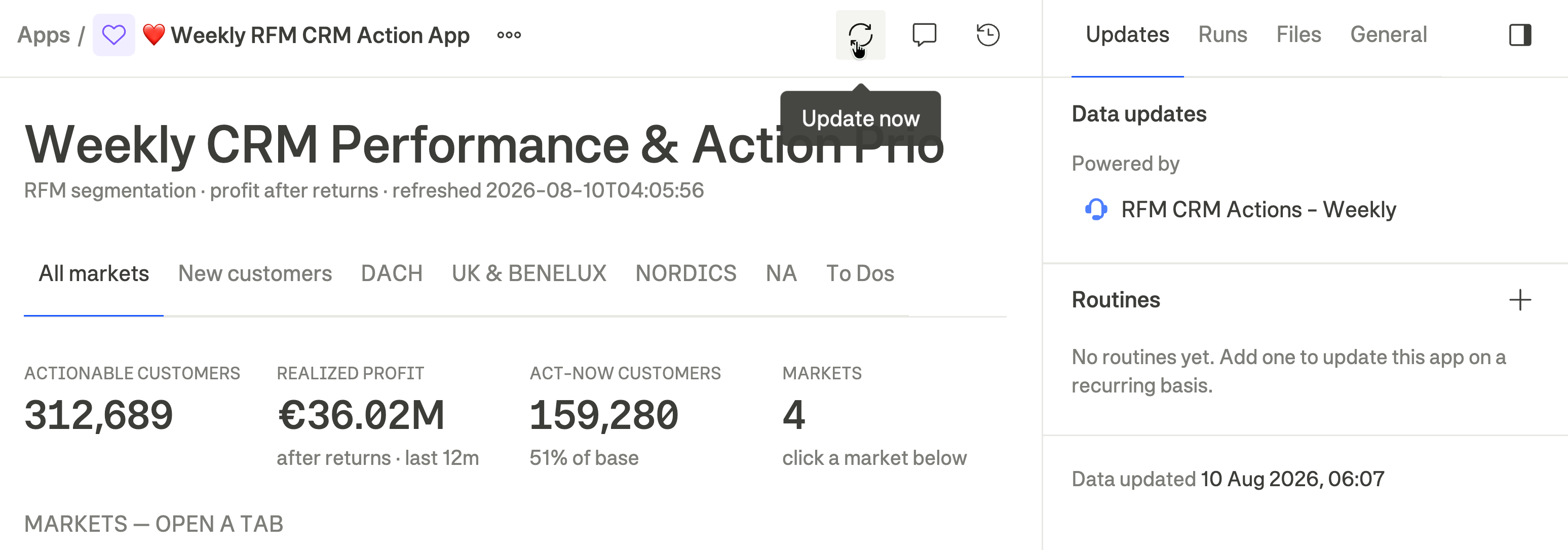
You can now see exactly how an app gets fresh data. Open any app, and the Updates tab names what powers it, the agent or skill behind it, along with when its data was last refreshed and when the next refresh is due. What used to be Runs is now History.
Update now appears only when it will actually do something. For an app driven by an agent, choosing it opens the conversation that does the work. For an app that fetches live data itself, the figures refresh in place, and you stay where you are. Where an update isn't possible, the tab explains why rather than leaving you with a greyed-out button.
Which updater an app uses is the decision of the agent that built it, since it depends on what that app's data needs. If you want it changed, ask for it in the conversation.
Two more integrations
Microsoft Business Central joins the agent integration catalogue. Microsoft's ERP covers accounting, inventory, orders, and fulfilment, so your agent can reason about stock and financials alongside the marketing data it already sees. Access is read-only. Setup is in the Business Central guide.
Klaviyo now sets up like any other connection. Add it from Integrations under Settings, enter a private API key, and the segment export runs from there. It follows Voyado, which became self-serve in August.
A conversation you can actually read
Agent conversations now render at a reading size rather than the size the rest of the interface uses for dense controls. Answers and your own messages step up from 13 to 15 pixels, and headings follow a ramp built for prose, so a heading never comes out smaller than the paragraph it introduces.
Code is more consistent as well. A tool card used to mix two monospace typefaces across three sizes, and input, output, and diffs now share one. Inline code scales with the surrounding text, while fenced blocks stay fixed, since a block is its own surface rather than part of a sentence.
The right-hand panel got the same attention. Section headings collapse now and remember what you left open.